By Eduardo Belaunzarán
📝 This is an English translation of an original Spanish article written by me, which I translated using ChatGPT for broader reach.
Every April 22nd, we celebrate International Mother Earth Day. It’s a time to reflect on the many battles being fought to preserve our planet. Today, I want to focus on one that hits close to home: the environmental impact of irresponsible mezcal production.
🌱 The Other Side of Agave
Agave—the heart of mezcal—is a noble plant that takes time to grow: anywhere from 8 to 50 years to reach maturity, depending on the species.
But when the pressure to produce and sell quickly increases, agave is harvested young. This interrupts its natural reproductive cycle and breaks the link with pollinators like the maguey bat, which plays a key genetic role in preserving agave biodiversity and defending it from disease.
Young agave also contains less sugar, meaning producers must use more piñas to get the same yield. This not only affects mezcal quality—it jeopardizes the long-term sustainability of the entire supply chain.
🌳 The Hidden Cost of Fire
Cooking agave takes a lot of firewood. Responsible producers use dead or recovered wood. Others simply chop down live trees.
A walk through Oaxaca’s Central Valleys shows the result: where trees once provided shade, people now stretch tarps to shield themselves from the sun.
On top of that, the roasting process emits significant pollutants into the air.
🐴 The Weight of Mezcal: On Animals and People
The next step, milling, isn’t all romance and rustic charm like marketing suggests. It often involves animal mistreatment (overworked draft animals) and human exploitation, with workers hand-crushing massive amounts of agave under harsh conditions.
💧 Water Pays the Price Too
Distillation may seem like the final step, but it’s actually one of the most damaging.
The heads and tails of distillation—byproducts with high levels of methanol and heavy metals—are often dumped untreated into rivers or fields.
These toxic waste streams end up contaminating water, crops, animals… and ultimately the people who rely on them.
🧾 The Cost of Chasing Volume
This is made worse by growing demand from international markets—especially the U.S.—for cheap, high-volume mezcal.
That race to the bottom on price creates powerful incentives to cut corners, ignore sustainability, and prioritize output over ethics.
🙌 Cheap Mezcal Comes at a High Cost
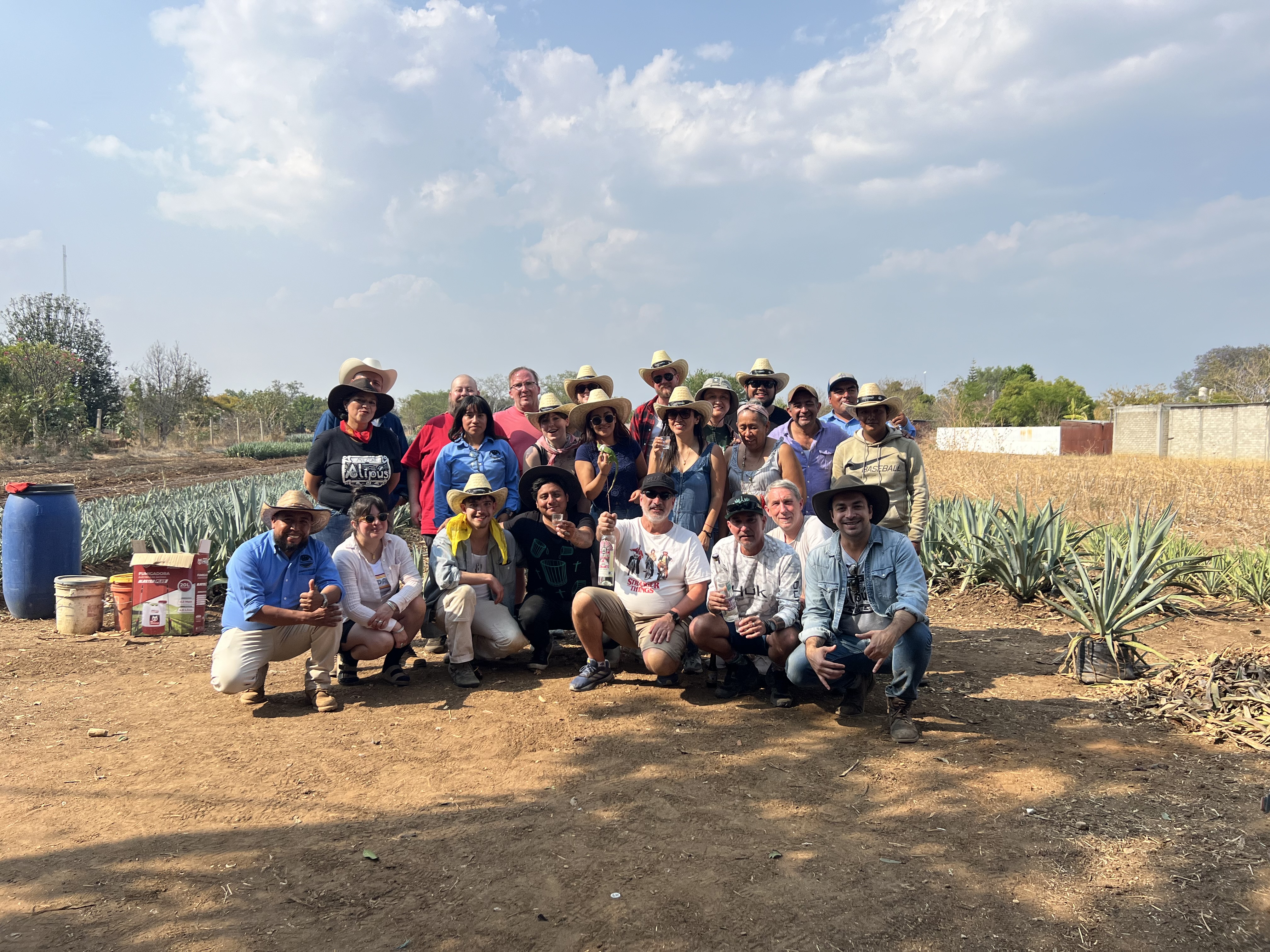
For nearly a decade, I organized events in Oaxaca to raise awareness about agave biodiversity, responsible production, and the real impact on mezcal-producing communities.
And here’s what I’ve learned:
Sustainable, environmentally responsible mezcal must be expensive.
There’s no way to make quality mezcal—respecting agave growth cycles, protecting ecosystems, and treating people fairly—without paying a fair price.
Every time we choose a cheap mezcal, we’re financing the destruction of agave fields, deforestation, water contamination, and the slow decay of the communities that bring this spirit to life.
Without realizing it, we become accomplices in a deep, lasting harm to Mother Earth.
💬 What do you think?
Are we ready to defend what truly matters?
 MEZCALEANDO