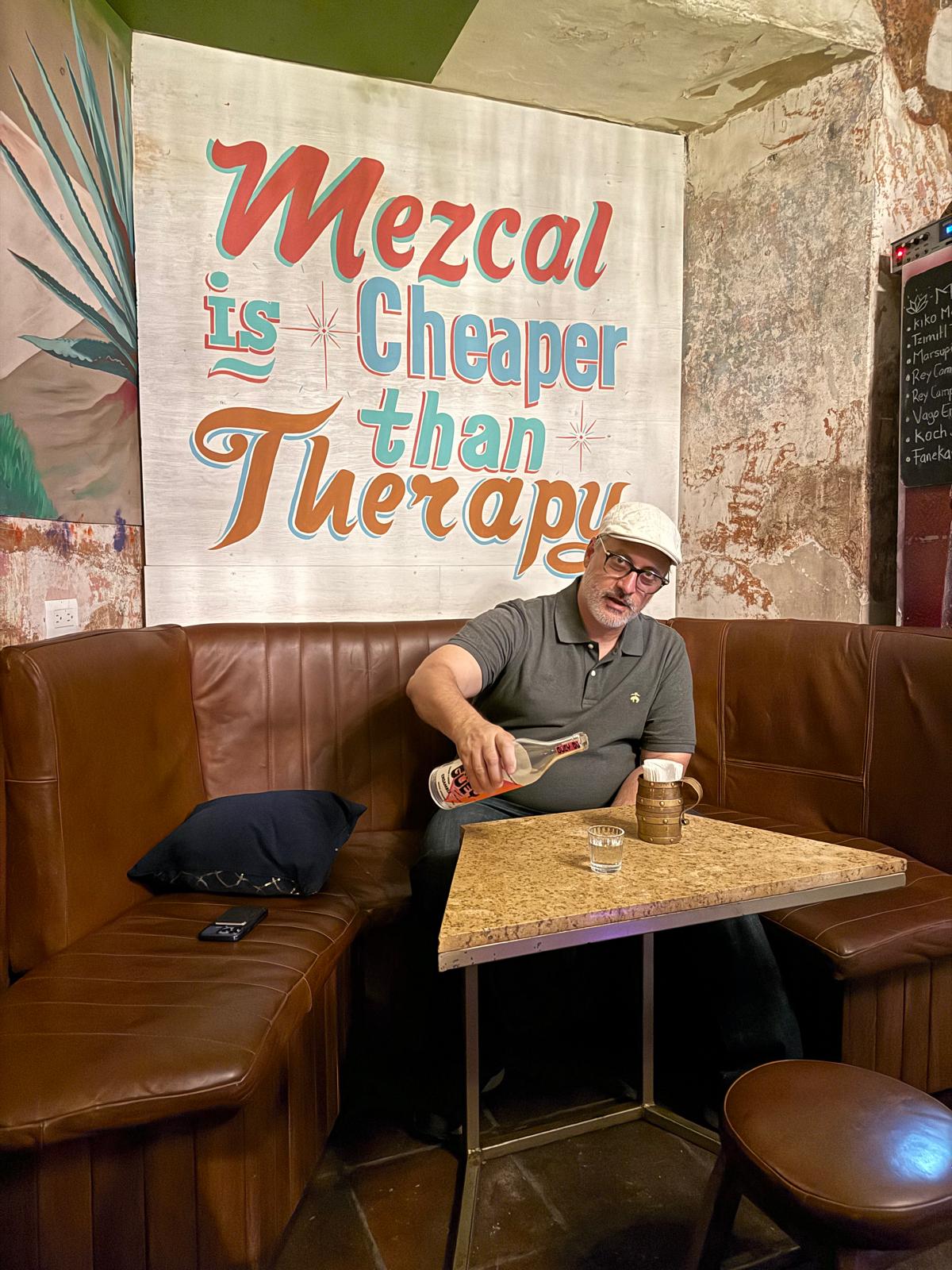
In 2008, when I began working with Mezcal in the US, nobody knew what I was talking about—not even myself. With the exception of a few aficionados and industry nerds, Mezcal was an absolute stranger.
Little by little, the work and the word penetrated walls, doors, shelves, and palates. We enthusiasts joined in from our trenches to contribute to the art of making Mezcal. Journalists began to publish, books proliferated, and today, 18 years later, we find ourselves submerged in a radically different landscape: an ocean of import brands (423 according to the 2025 regulatory report) in an industry that struggles to differentiate itself in front of a consumer that has definitively changed.
The challenge of «giving birth» in a saturated market
In February of last year, I was invited to join a project to give birth to a new brand: Mezcal Güey. The challenge is massive: how do you show the face of a good product in the middle of this ocean of new insignias, some swimming against the current and others sailing with the wind?
I accepted the great challenge because the brand is legitimate. I didn’t join because of the urgency of having a new project, but because I found a brand with authenticity:
- Production in San Dionisio Ocotepec, Oaxaca (tierra de gente buena).
- Artisanal methods, local employment, and respect for wild agave.
- A Zapotec family, the Garcías, who are not improvised; they possess tradition, culture, savoir-faire, and a story that bridges the northern border with their origin: Eleuterio worked as a rodeo rider during his time as a migrant.
- A business model where earnings return, are reinvested, and create jobs in Mexico.
2026: Survival and margins under fire
The challenges I see for 2026 are structural. It’s not just about opening new states strategically; it’s about understanding that the distributor is losing margin and retail space is tighter than ever. Why? Because consumption habits have taken a radical turn.
Today, we compete against Tequila with an AbV on steroids and against other Mezcales with increasingly clever names. But above all, we have to adapt to a lifestyle shift: the rise of weight-loss drugs (GLP-1)—which reduce cravings and make drinking dangerous—, the normalization of recreational THC, and a new generation that prioritizes wellness over intoxication. All of this has drastically reduced consumption occasions. In this context, moving a case of Mezcal is more expensive and difficult than ever.
As a phrase says—one that isn’t mine but I share—alluding to the story of Mayahuel (Goddess of Agave, who upon being reborn as a maguey had 400 rabbits drinking from every leaf):
¡Ya hay demasiados conejos para tan pocas chichis! (There are already too many rabbits for too few teats).
(If you want to dive deeper into the origin of this story and the myth of the 400 rabbits, I wrote a detailed post on my blog which I’ll share in the first comment).
If today’s consumer drinks less but drinks better, a brand purge is inevitable.
That is why at Mezcal Güey we are betting on flavor, the quality of the base product, sustainability and the preservation of the ecosystem surrounding our production, excellence in craftsmanship, the human factor, creativity, and innovation.
I’d like to open the debate with you:
How are you adjusting your strategies to these new consumption habits? What factors do you believe will determine the survival of a Mezcal brand in this ocean of options in 2026?
I’ll see you in the comments.
 MEZCALEANDO